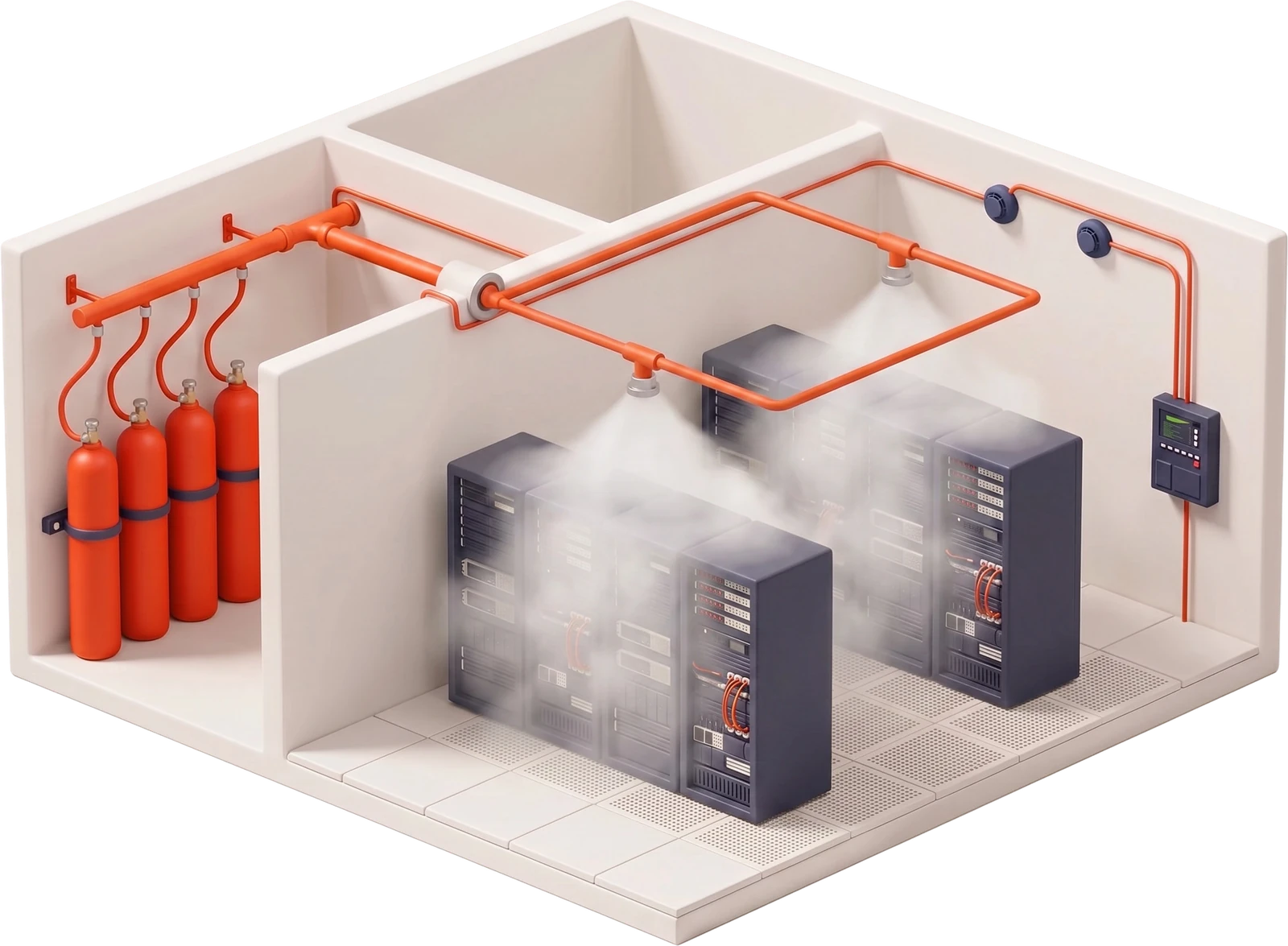
A room integrity test is mandatory
85% of the extinguishing concentration must be held in the space for at least 10 minutes. Even a gap under the door can render the system useless.
Agent families — system options
The heart of the system is the chosen agent. Select one — its full dossier opens below.
Leaves no residue on electronics, does not conduct electricity, and breaks down in the atmosphere within 5 days. The most future-proof, safest choice for occupied spaces and data centers.
How does it extinguish?
On discharge it vaporizes and absorbs heat from the flame at the molecular level; the combustion chain is broken.
The Science →Technical specifications
The most widely used clean suppression agent in the world. A strong option for upgrading existing systems and for retrofit.
How does it extinguish?
Heat absorption plus suppression of flame radicals. Its active compound has been used in asthma inhalers since 1942.
The Science →Technical specifications
The oldest and most economical gaseous solution. Installed only in unoccupied spaces, with a strict safety interlock chain.
How does it extinguish?
Dilutes oxygen to a level where combustion cannot be sustained; creates strong cooling as it expands.
The Science →Technical specifications
Nitrogen and argon blends. Zero environmental impact, safe for people, economical in large volumes.
How does it extinguish?
Dilutes oxygen to the ~12–13% band: the fire goes out, people keep breathing — equivalent to 3,500 m of altitude.
The Science →Technical specifications
Working principle
Cross-zoned detectors
Second-zone confirmation, evacuation warning
Countdown for personnel evacuation
Design concentration in ≤10 sec
Human safety
The distance between the design concentration and the upper limit safe for humans (NOAEL):
Bar ratios are indicative; drawn to true scale in the design phase.
System anatomy
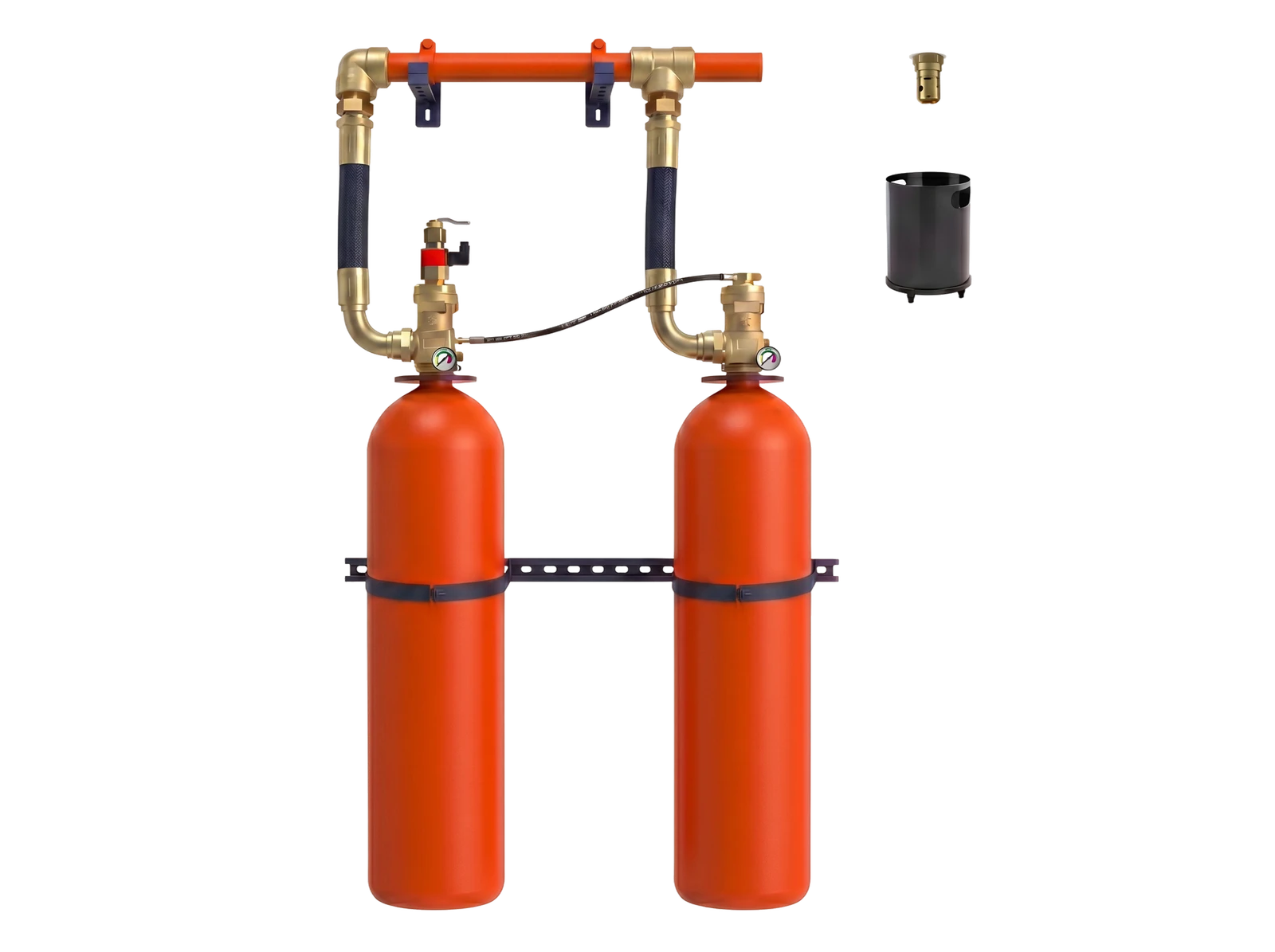
85% of the extinguishing concentration must be held in the space for at least 10 minutes. Even a gap under the door can render the system useless.
From pressure checks to the 10-year hydrostatic test — scheduled maintenance keeps your system ready at all times.