On a new installation
The standards make the test mandatory for every newly installed gaseous system; the result is documented before the system is commissioned.
Why it is required
For a gaseous system to work, 85% of the extinguishing concentration must remain in the space for at least 10 minutes. That period is what the standards call Hold Time; if the room cannot hold it, the cylinders empty and the fire continues.
What gets measured
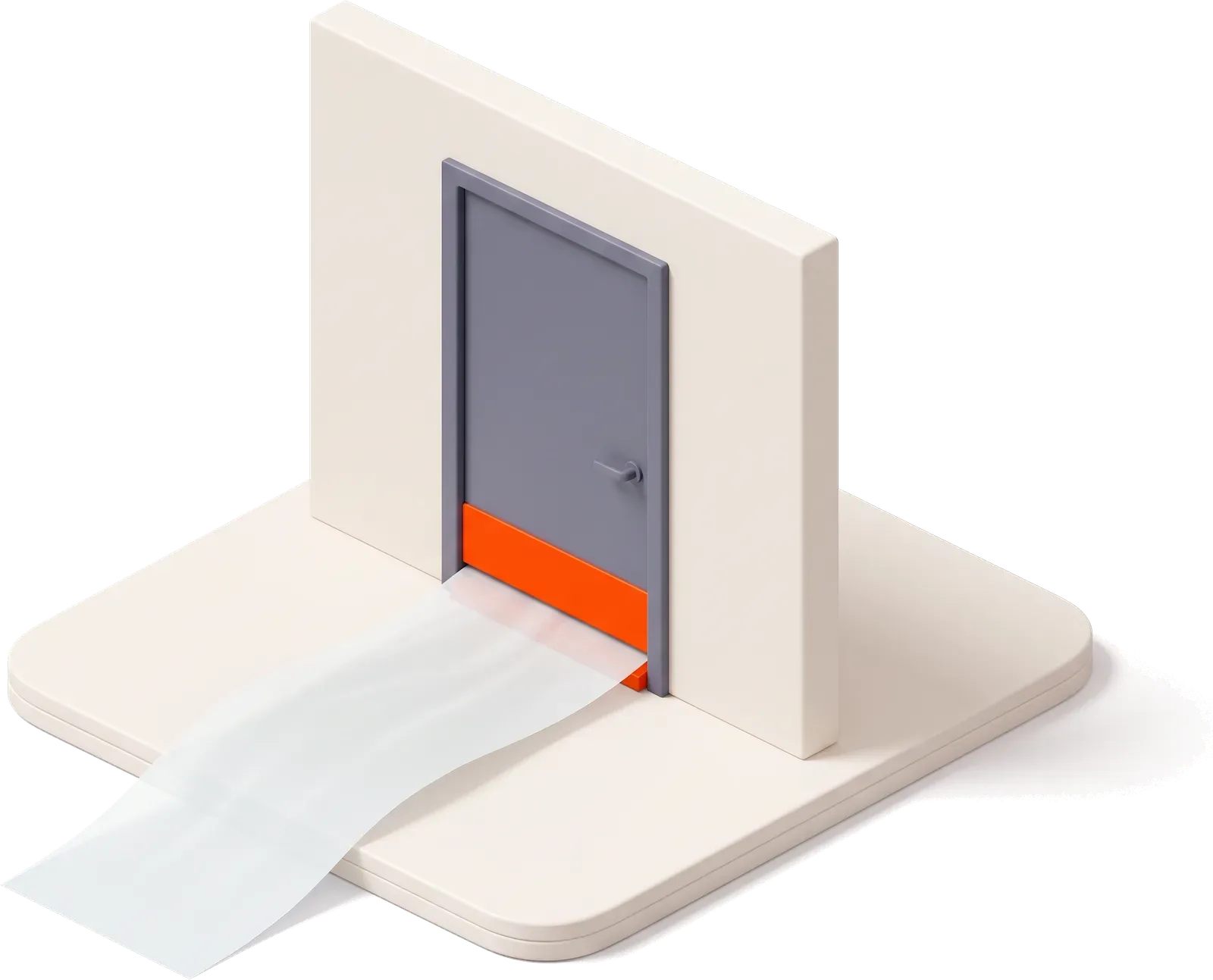
Even a gap under the door can render the system useless — all of it has to be measured.
How the test runs
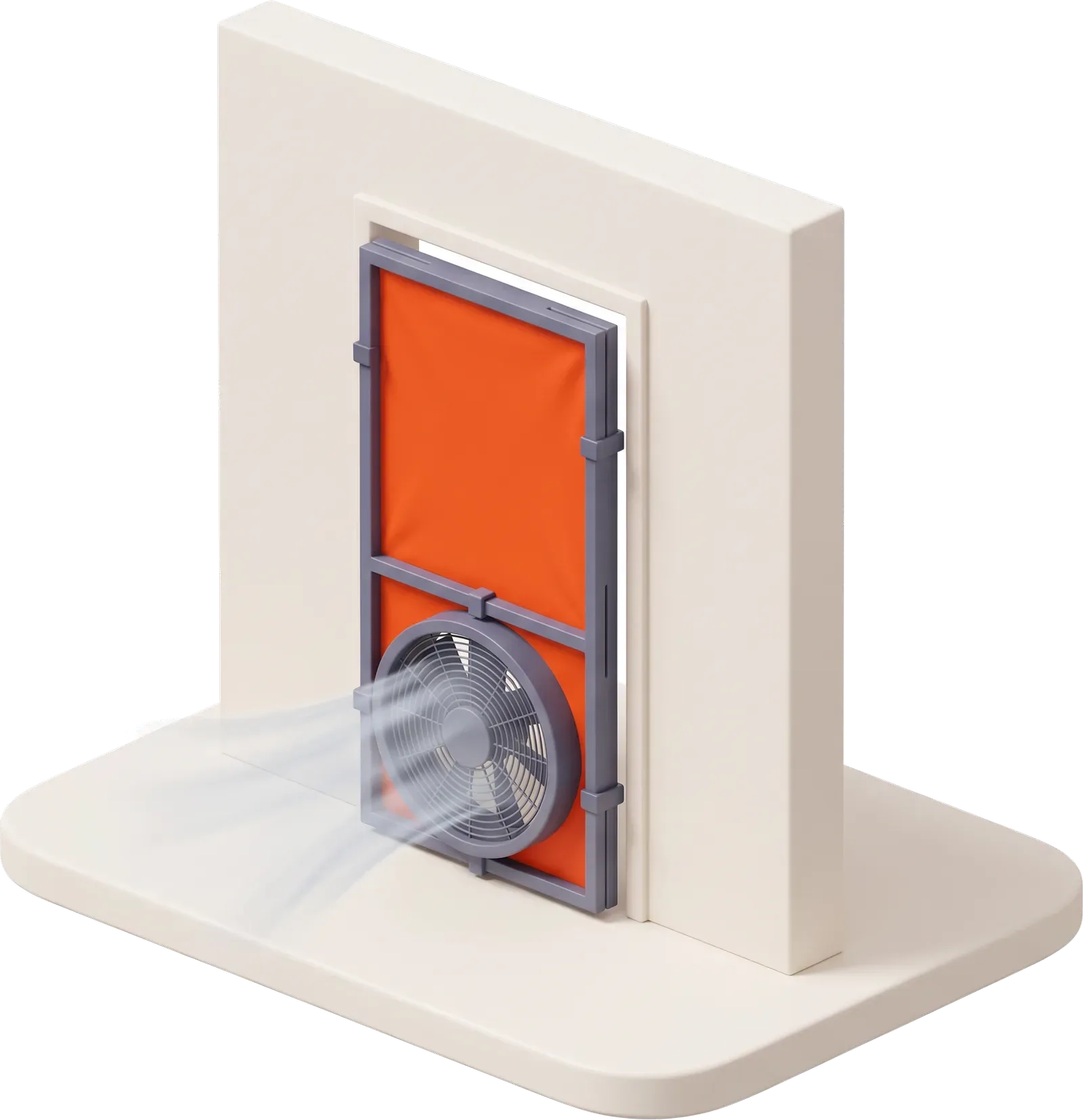
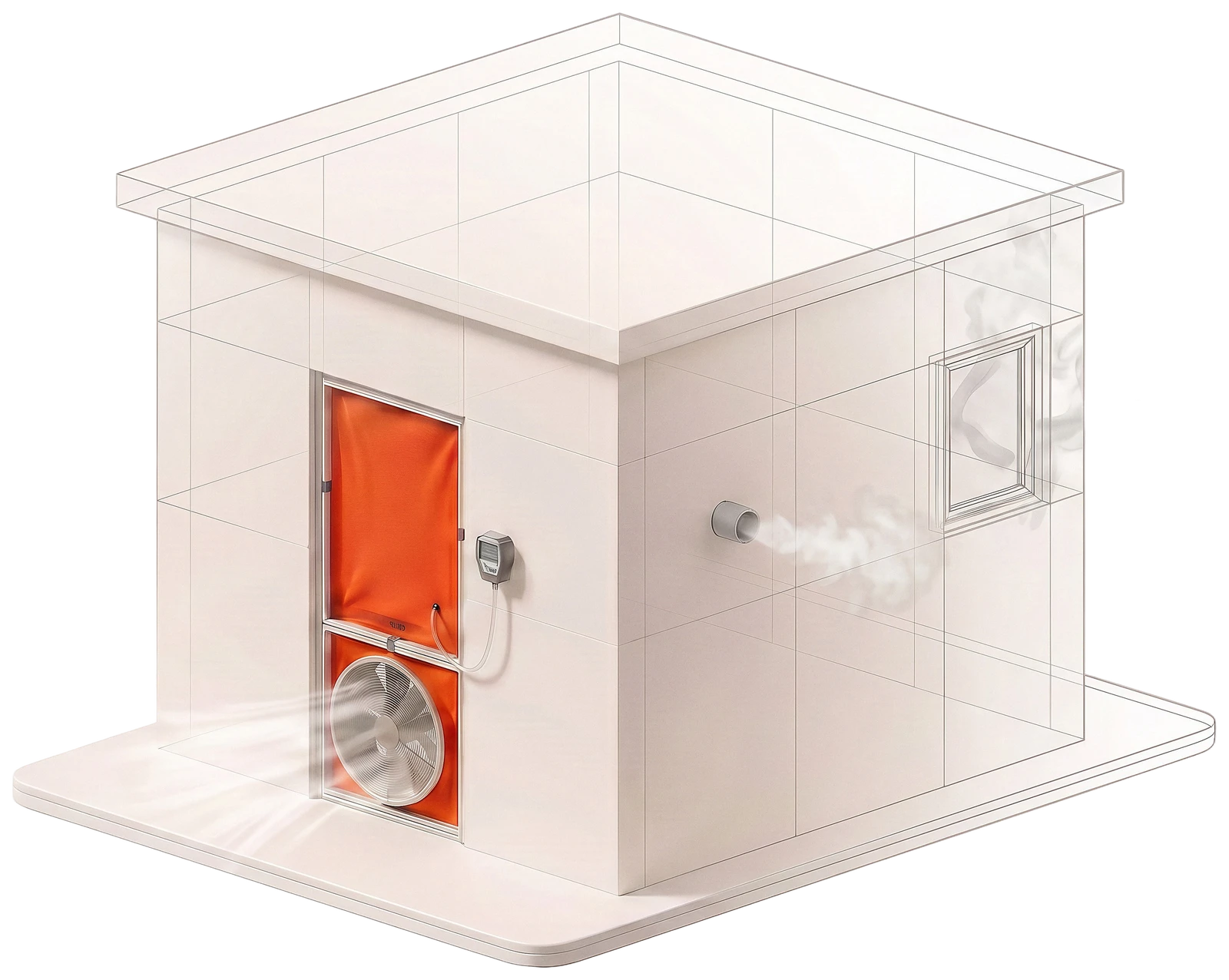
Door-fan equipment is installed in the doorway of the space.
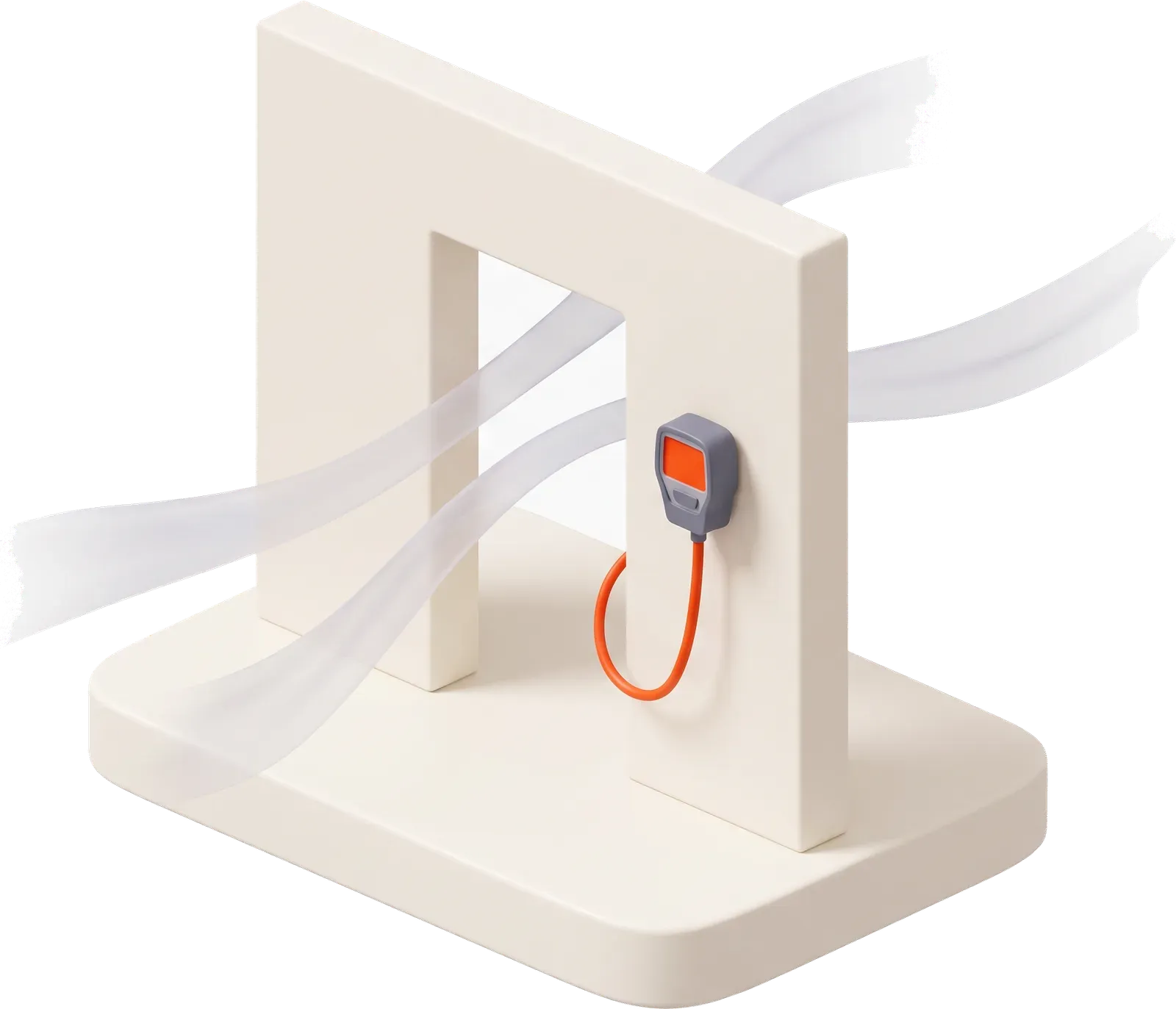
The pressure differential between the space and outside is measured to read how the room behaves.
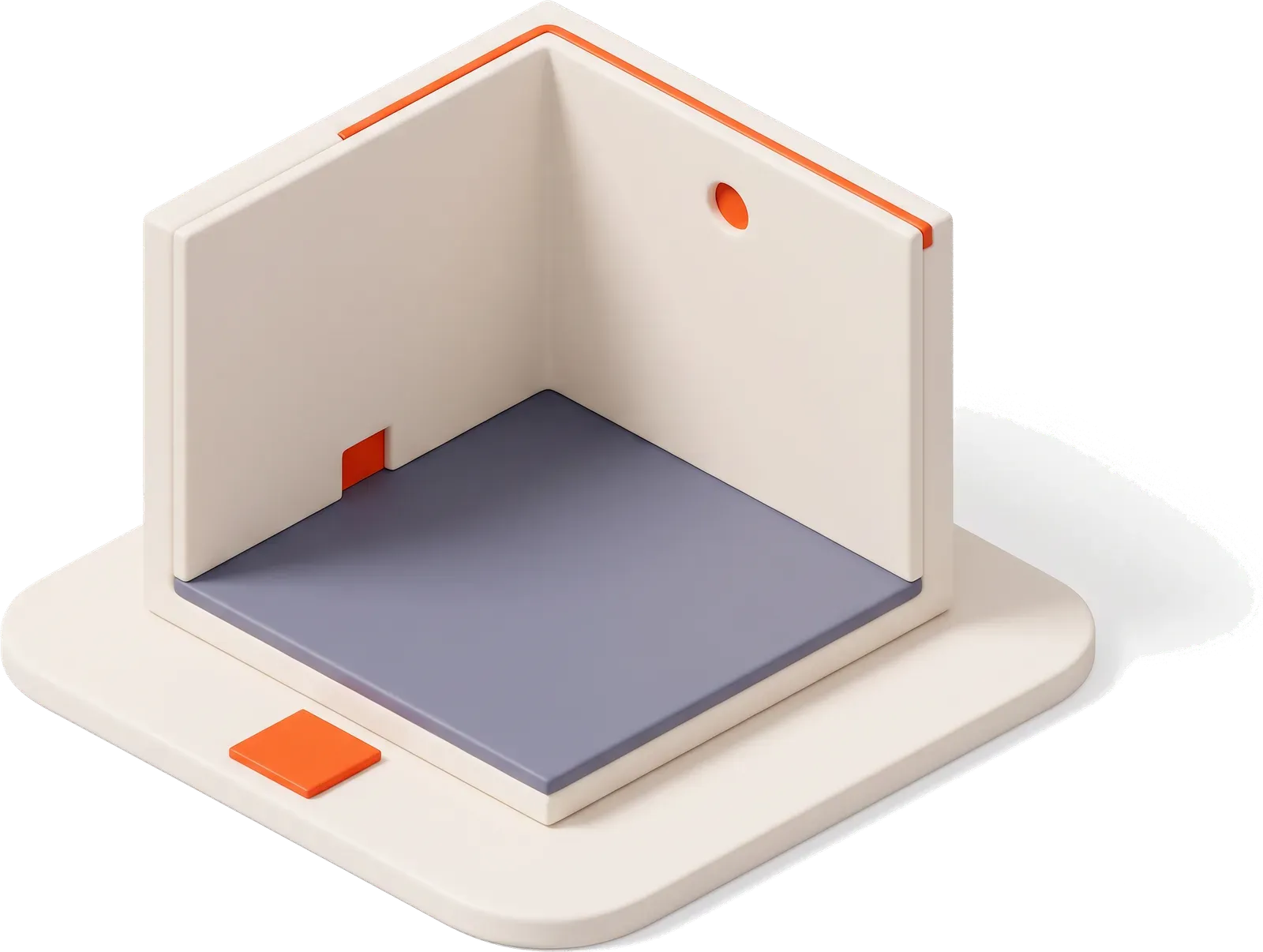
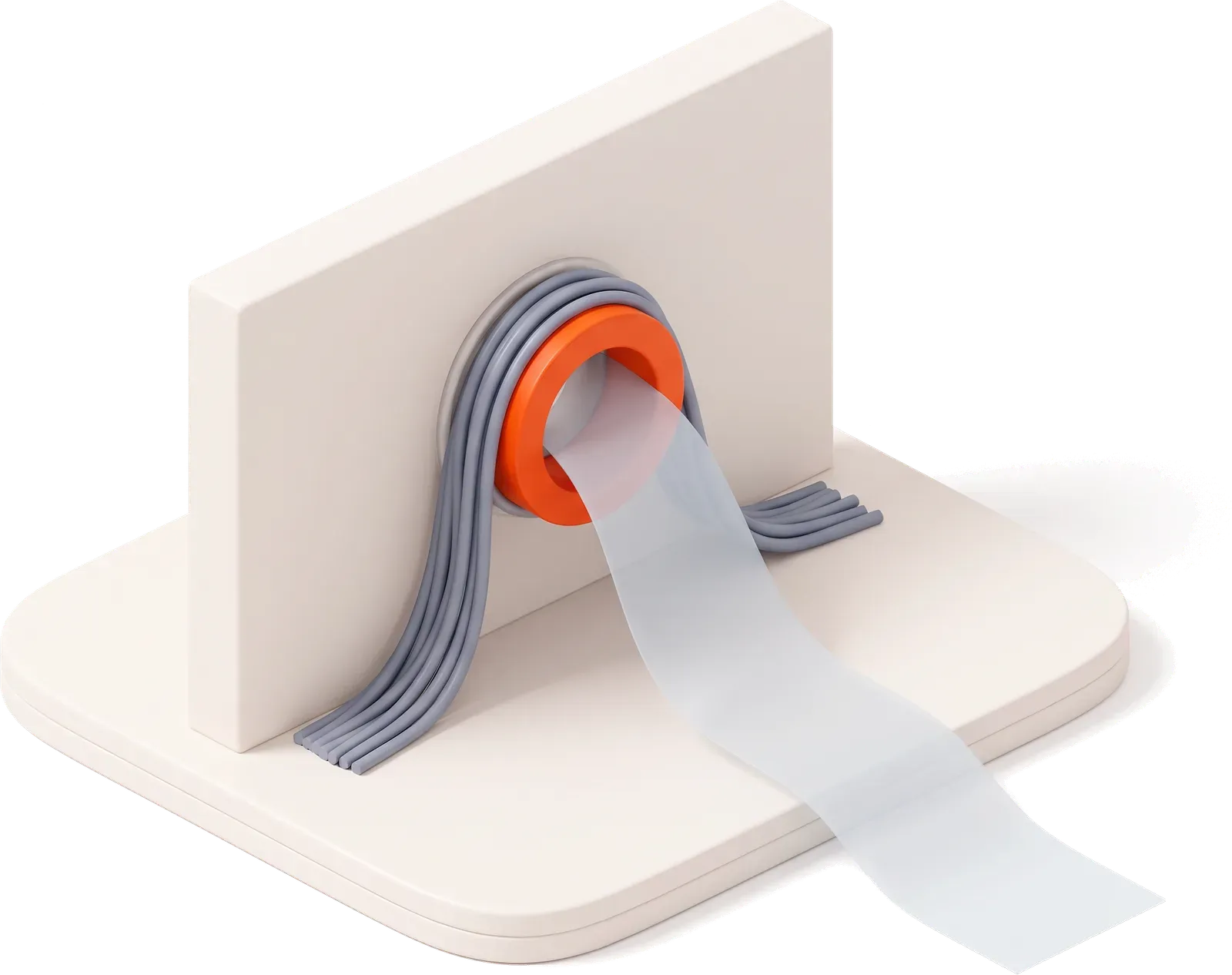
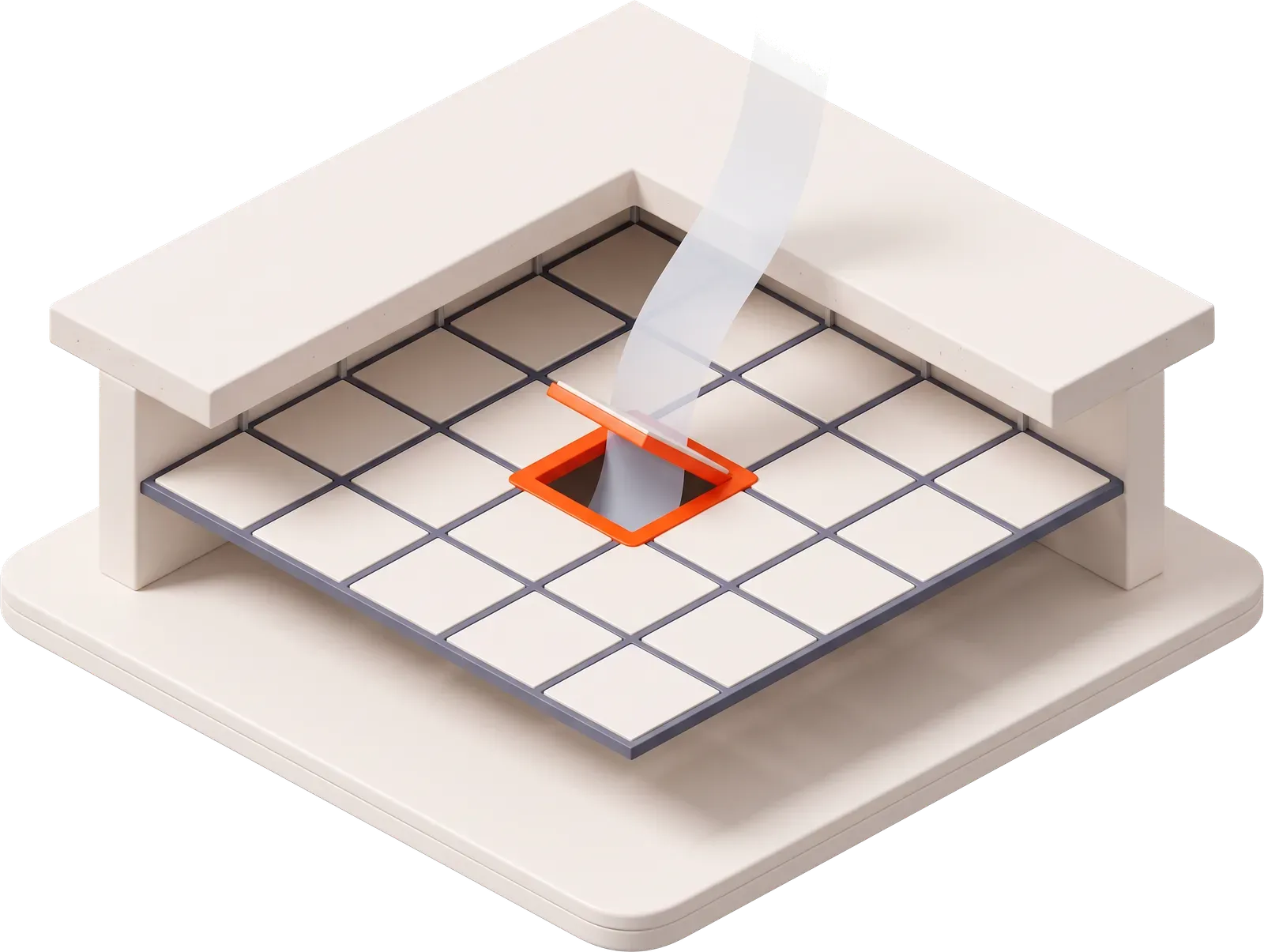
The measurement is converted into the room's total leakage area — and where the leakage comes from is identified.

The result is reported to EN 15004 / NFPA 2001: is 85% of the concentration held for 10 minutes?
When it is needed
The standards make the test mandatory for every newly installed gaseous system; the result is documented before the system is commissioned.
A change to the space changes its leakage area — the test must be repeated after renovation.
What the test measures is whether the room can hold a gaseous system's design concentration.
Seven stops from survey to recharge: the test is the sixth of them.