Suppression Systems
Fire begins when oxygen, heat, and fuel come together. Gaseous suppression breaks that triangle without resorting to water or powder — without harming electronics, archives, or people.
Decision tool
Which agent, for which case?
Compare the four agent families side by side.
| Novec 1230 (FK-5-1-12) | FM-200 (HFC-227ea) | CO₂ (high pressure) | Inert (IG series) | |
|---|---|---|---|---|
| Discharge time | ≤10 sec | ≤10 sec | ~60 sec | ~60–120 sec |
| Safety in occupied spaces | High (64% safety margin) | Safe (within NOAEL) | Lethal — unoccupied spaces only | Safe (altitude-equivalent O₂) |
| Environmental profile | GWP<1 · 5 days in atmosphere | GWP ~2100+ · 32 years (F-Gas restricted) | Natural gas | Natural gases (GWP 0) |
| Footprint (relative cylinders) | 1 cylinder | ~1 cylinder | 4 cylinders | 6 cylinders |
| Ideal use | Data centers, archives, occupied spaces | Existing systems, retrofit | Transformers, unoccupied industrial | Large volumes, multi-zone |
Source: EĞİTİM 2025 p.14/36-37 · RX5112 sec. 5.3
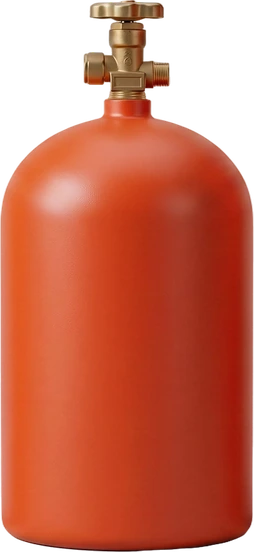
Cylinders needed for the same space
Halon*

Novec 1230
CO₂
Argon

Cylinder count drives storage-space planning. *Halon banned — comparison reference only.
Application areas
Where gaseous suppression is the right call
There are also spaces where gaseous suppression is not appropriate (ISO 14520) — we assess this together during the survey.
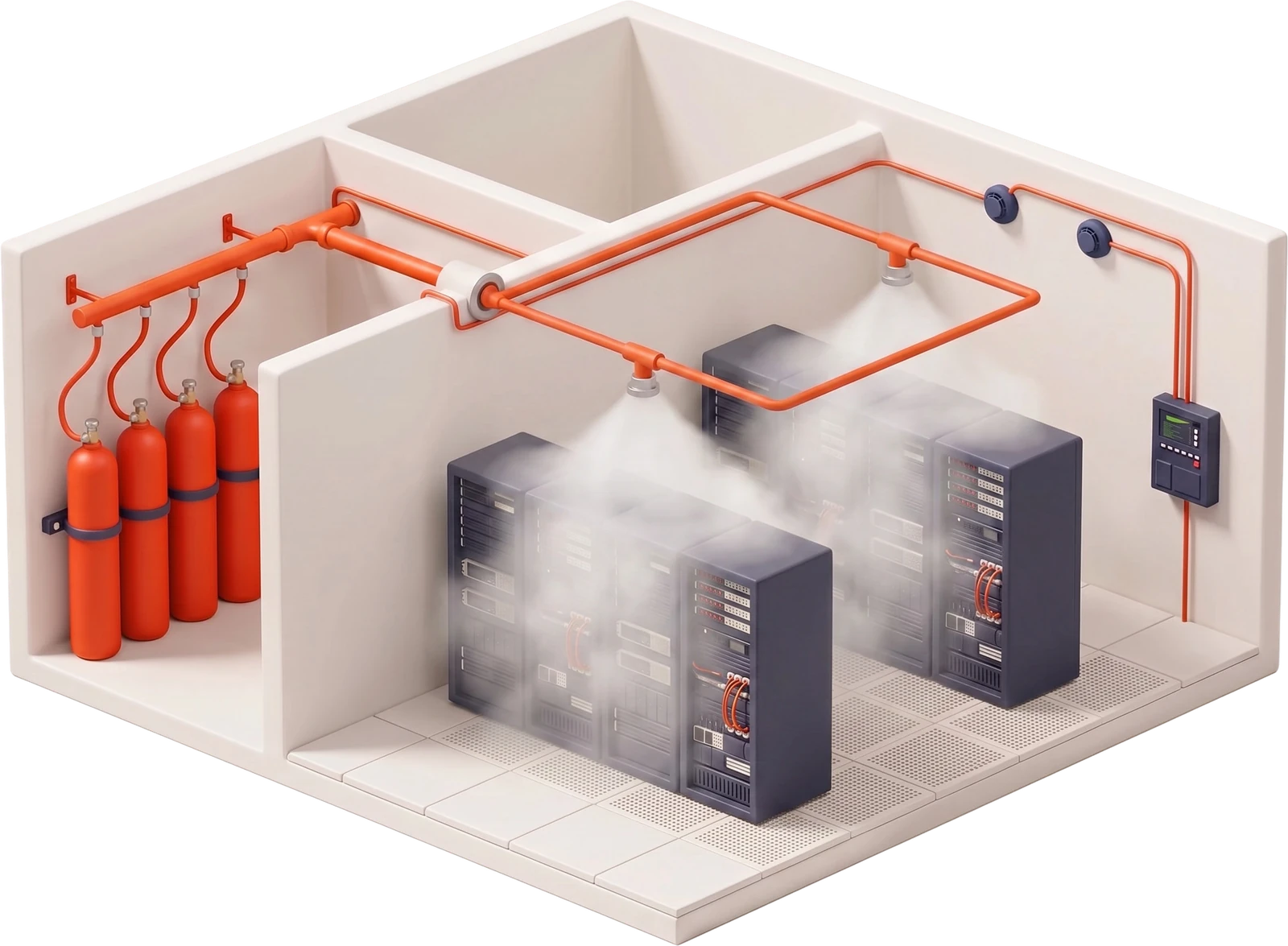
- 01IT / Server
- 02Telecom
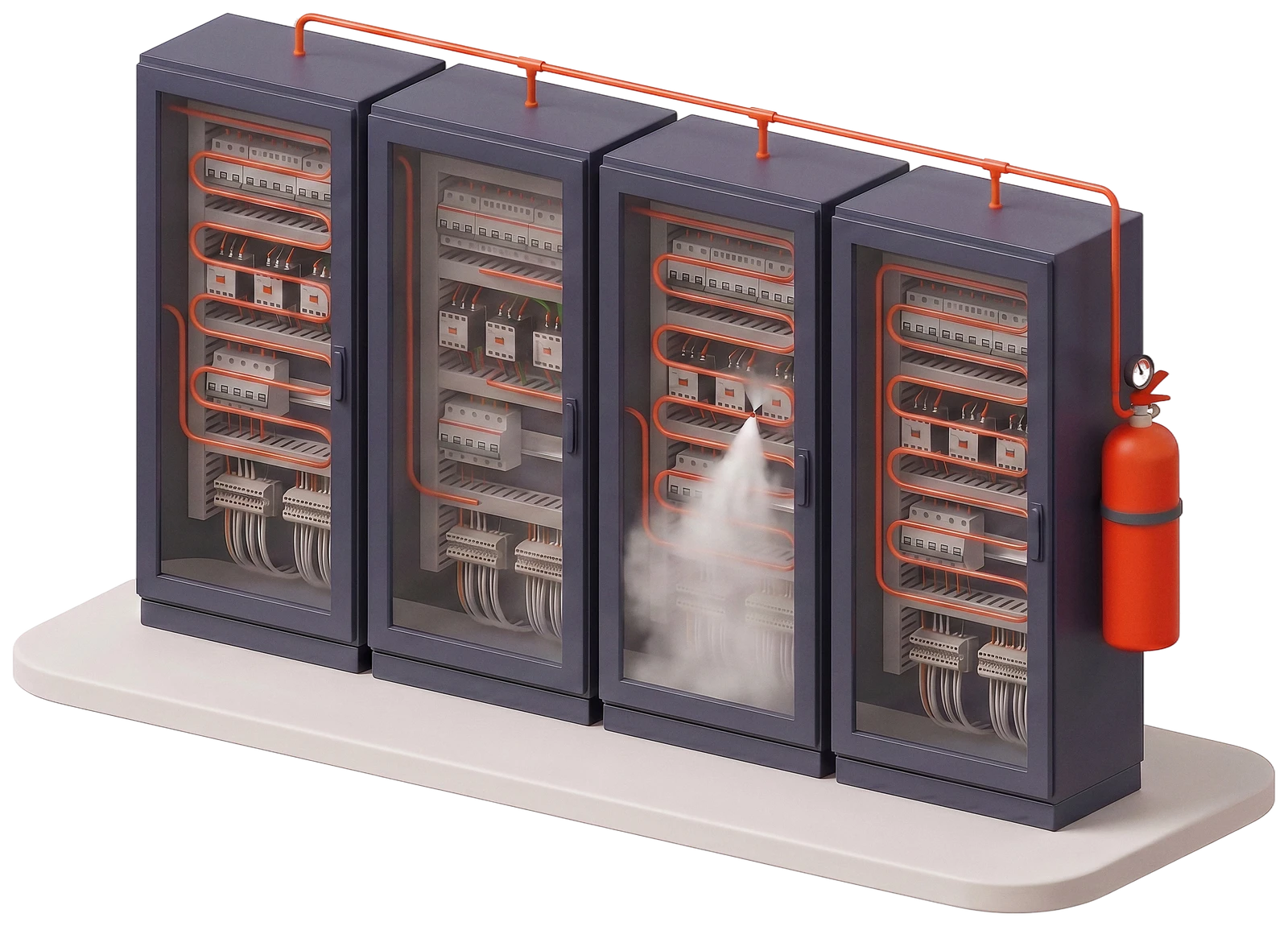
- 03Power Distribution
- 04Archive / Museum
- 05Transformer
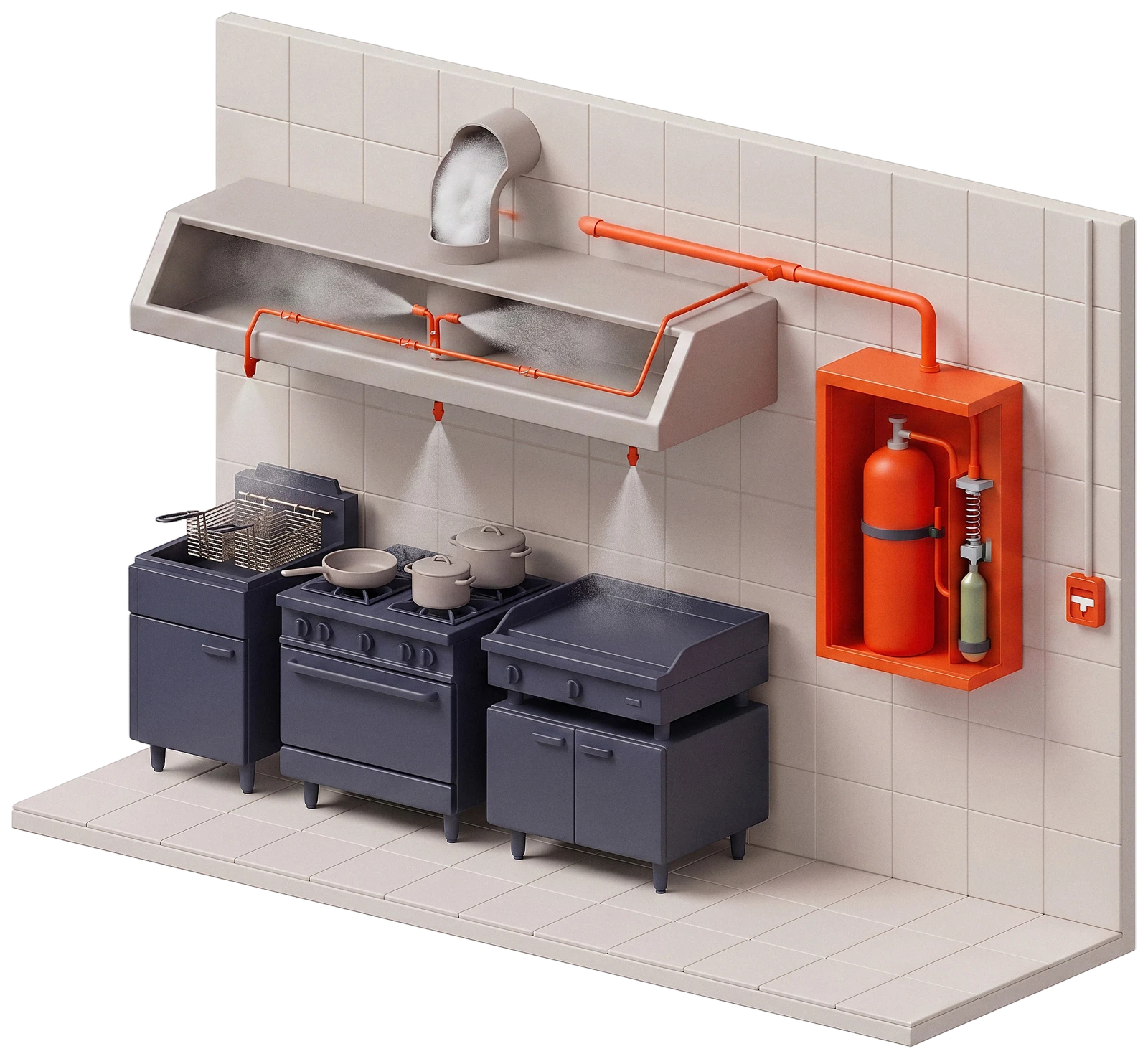
- 06CNC / Machinery
- 07Paint Booth
- 08MRI / Imaging